In the UK, there are many different wild species of plant that – if ingested – can be extremely dangerous for your dog. Whether you’re walking your pet along urban streets, or you’re more akin to letting them run along the natural countryside, it’s important to be aware of the plants and foliage that could have negative side effects on your pets.
Here at Perfect Pooches, our family-run dog breeders believe that every pet owner should be properly informed about ways to keep your dog safe and healthy. With spring approaching and fresh blooms expected to be in full swing, we’ve put together this helpful guide to the various types of plant that grow in the UK that could present a hazard to your pets. Keep reading for more information!
Toxic Plants: What To Look Out For
There are many different plants growing in the UK that are vibrantly coloured and eye-catching – not only for you but for your dog too. However, many of these plants are not dangerous unless consumed in high quantities as the bright colours seen on flora like the azalea or bluebell are there to attract insects for pollination and survival. It’s important to note that if you have a smaller breed like a dachshund or cavapoo that smaller doses can have a hugely negative effect. Some of the plants you should keep your dog away includes:
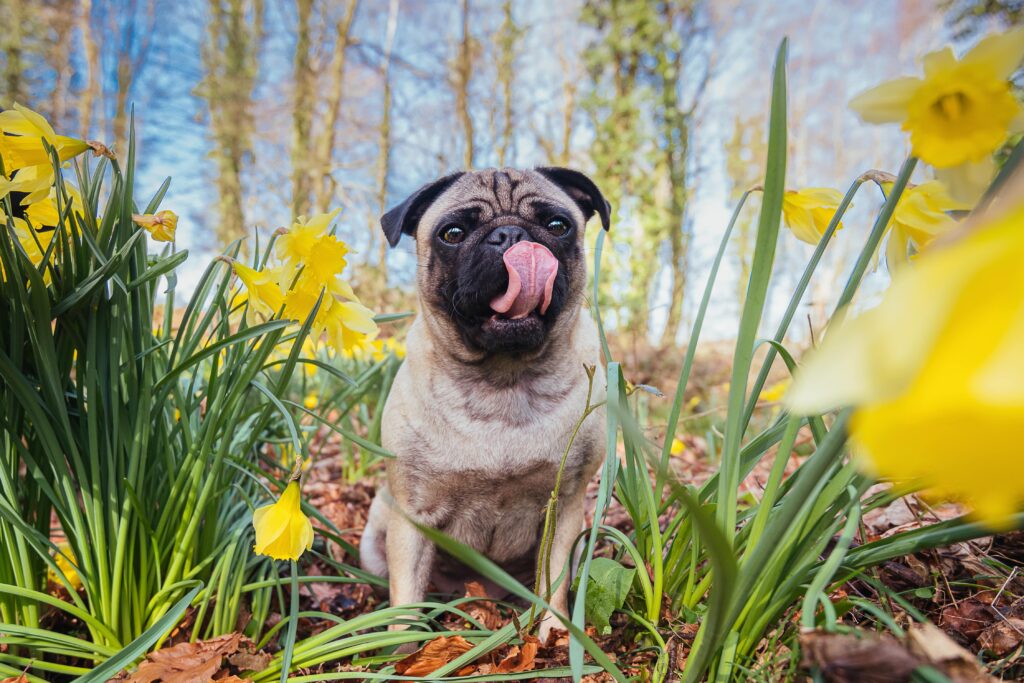
- Daffodils
- Foxgloves
- Horse Chestnut (conkers)
- Ivy
- Lily of the Valley
- Garlic or onion plants
- Oak (acorns)
- Tulips
Just because certain parts of these plants may not be toxic, like the bulbs or berries, doesn’t mean you should let your pup roam free. To guarantee your furry friend’s safety, it’s best to steer clear of the entire plant. Stay one step ahead of danger by avoiding these potential plant hazards during your next outdoor escapade with your four-legged companion.
Symptoms of Poisoning from Plants
If you think your dog may have come into contact with one of these dangerous plants, it’s important to keep an eye on them to ensure symptoms are caught and treated early. If your pooch has any of the following, make sure you get them straight to the vet for treatment:
Rashes or Red Skin: Check your pet all over for signs of skin irritation. Longer hair breeds and poodle breeds – including crosses like cockapoos and maltipoos, may be harder to inspect due to fur density or structure. Simply use a brush to gently move fur away from the skin to inspect for redness or irritation.
Diarrhoea or Vomiting: Sometimes just like people, dogs may get an upset stomach that leads to vomiting or diarrhoea, however if there are chewed up bits of plants in it, there is cause for concern. Excessive illness can cause dehydration and you must make sure you take your dog to the vets as soon as possible if the sickness and diarrhoea persists.
Excessive Drooling or Urinating: Due to the toxins in any one of the plants mentioned above, you may notice an increase in the amount your dog is drooling or urinating. This will be easier to notice on breeds that may not drool as much like cocker spaniels or cavalier king charles spaniels, however it’s important to keep track of your furry friend to ensure their health.
It’s a sad reality that if ignored, these symptoms could lead to worse – including seizures and twitching, or collapse and even death. Keep your companion safe by remaining vigilant.
Other Natural Hazards
As a pet owner, it’s important to be aware of hazards that could harm your furry friend when they’re out and about. In addition to plants, there are several other potential dangers to be mindful of:
- Compost and grass clippings can contain dangerous moulds and bacteria. Store compost in a secure bin.
- Fungi and mushrooms can be life-threatening if ingested by your dog. It’s best to avoid them altogether.
- Pesticides, weed killers, and fertilisers often contain toxic substances. Avoid spraying areas your dog usually visits and use barriers or covers.
- Grass seeds can cause irritation, infection, and spread to other parts of the body. Keep an eye out for them in fields of long grass and when reseeding your lawn.
By taking these precautions, you can help keep your pet safe and healthy while enjoying time outdoors.
Contact our team at Perfect Pooches to find out more!
If you want more tips on keeping your dog safe in the spring, or if you’re looking to add a brand new furry bundle of joy to your family, get in touch with Perfect Pooches today! We offer a range of breeds to choose from, from KC registered pups to Pedigree club cross-breeds, and we’re sure to have exactly what you’re looking for.
We’re only a phone call away so don’t delay! Find out about our waiting lists now!