Bringing a new puppy into your home is an exciting experience, especially for children. However, it’s essential to ensure that both your child and the puppy feel safe and comfortable during this transitional period. Proper introductions can lay the foundation for a harmonious relationship and prevent potential issues down the line.
At Perfect Pooches, we are reputable dog breeders. One of our main priorities when pairing families with their new puppy is ensuring any transitions involving children are safe and stress-free for all. That’s why our team has created this helpful guide to help you through those early introductions and make sure your pooch and your kids are lifelong friends! For more information, get in touch now.
Why Establishing Boundaries is Important
Introducing a puppy to your child is about more than just letting them play together; it’s about teaching both parties to respect each other’s space and needs. Establishing boundaries early ensures that your child knows how to interact with the puppy safely and that your puppy feels secure in its new environment. Some of the necessary boundaries to put in place from day one include:
- Setting clear rules for your child, such as not touching the puppy when it is eating or sleeping.
- Designating safe spaces where the puppy can retreat if it feels overwhelmed.
- Teaching your child to ask permission before picking up or petting the puppy.
- Reinforcing positive behaviors with praise and gentle correction when necessary.
- Monitoring interactions closely to identify and address any signs of stress or discomfort in either the child or the puppy.
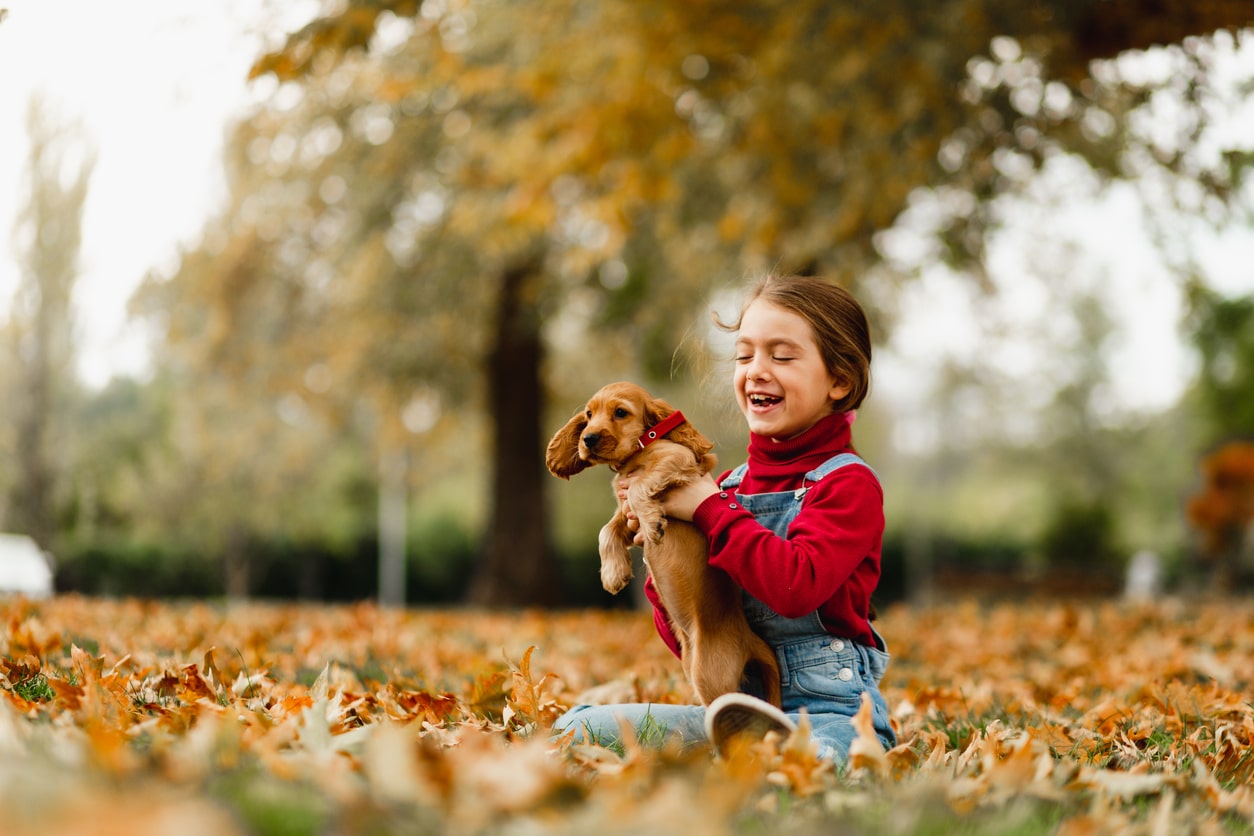 By establishing boundaries, you create a safe and respectful environment that benefits everyone in your household. If you’re looking for a brand new puppy that’s been raised in a loving family home, Perfect Pooches are reliable, council-licensed dog breeders. Get in touch now to find out about puppies we have available or to join our waiting list.
Recognising Body Language
Understanding your puppy’s body language is crucial for preventing misunderstandings and potential conflicts. Puppies communicate primarily through non-verbal cues; teaching your child to recognise these signs will help them interact more effectively.
For instance, a wagging tail isn’t always a sign of happiness; it can also indicate nervousness or excitement. Similarly, if a puppy tucks its tail between its legs, lowers its head, or yawns frequently, it may be feeling stressed or scared. Teach your child to look out for these signs and give the puppy space when needed.
Additionally, growling or snapping should never be ignored or punished without understanding the cause. Often, these behaviors are a puppy’s way of saying it feels threatened. Encourage your child to back away calmly and avoid further interaction until the puppy has calmed down.
Prioritise Careful Handling
Young children are naturally curious and may not realise that their actions can hurt or frighten a puppy. Educating your child on the importance of gentle handling is essential to avoid unintentional harm, particularly with smaller breeds like Cavalier’s, Cavapoos, Dachshunds, Toy Poodles, and Pomapoos.
Demonstrate the correct way to pick up and hold a puppy. Support its chest and hindquarters to prevent strain on its body. Remind your child to avoid grabbing the puppy by its ears, tail, or legs, as these areas are particularly sensitive.
Supervised practice sessions can be a great way to reinforce these lessons. Encourage your child to use an open hand when petting the puppy and to speak softly. Gentle handling protects the puppy physically and helps build trust between the two.
 Always Supervise
 Always Supervise
No matter how well your child and puppy get along, supervision is key to ensuring their safety. Puppies, like young children, are unpredictable and can act out if they feel threatened or overstimulated. By staying present during their interactions, you can intervene if necessary and provide guidance.
Supervision also allows you to model appropriate behaviours for your child. For example, you can show them how to approach the puppy calmly, recognise when the puppy needs a break, and respond to any signs of discomfort. Over time, your child will learn to adopt these behaviours independently.
Furthermore, supervising interactions helps you catch potential problems early. If the puppy consistently displays signs of stress around your child, or if your child struggles to follow the established rules, you can address these issues before they escalate.
For more information, contact Perfect Pooches now
Introducing a new puppy to your child is a rewarding experience, but it requires patience, understanding, and effort. Perfect Pooches is here to help you navigate this process with expert advice and professional support. We offer various dogs who are perfect as family dogs, such as Cocker Spaniels and Cockapoos, so get in touch now to find out what puppies we currently have for sale.